Having sat on planning committees myself, I was fascinated from the outset about the strange political environment they create.
Councillors listen to residents, consider the professional advice of planning officers and make a balanced judgement about whether a development should proceed. This all sounds very normal, and efficiently, but in practice the dynamics can be rather different.
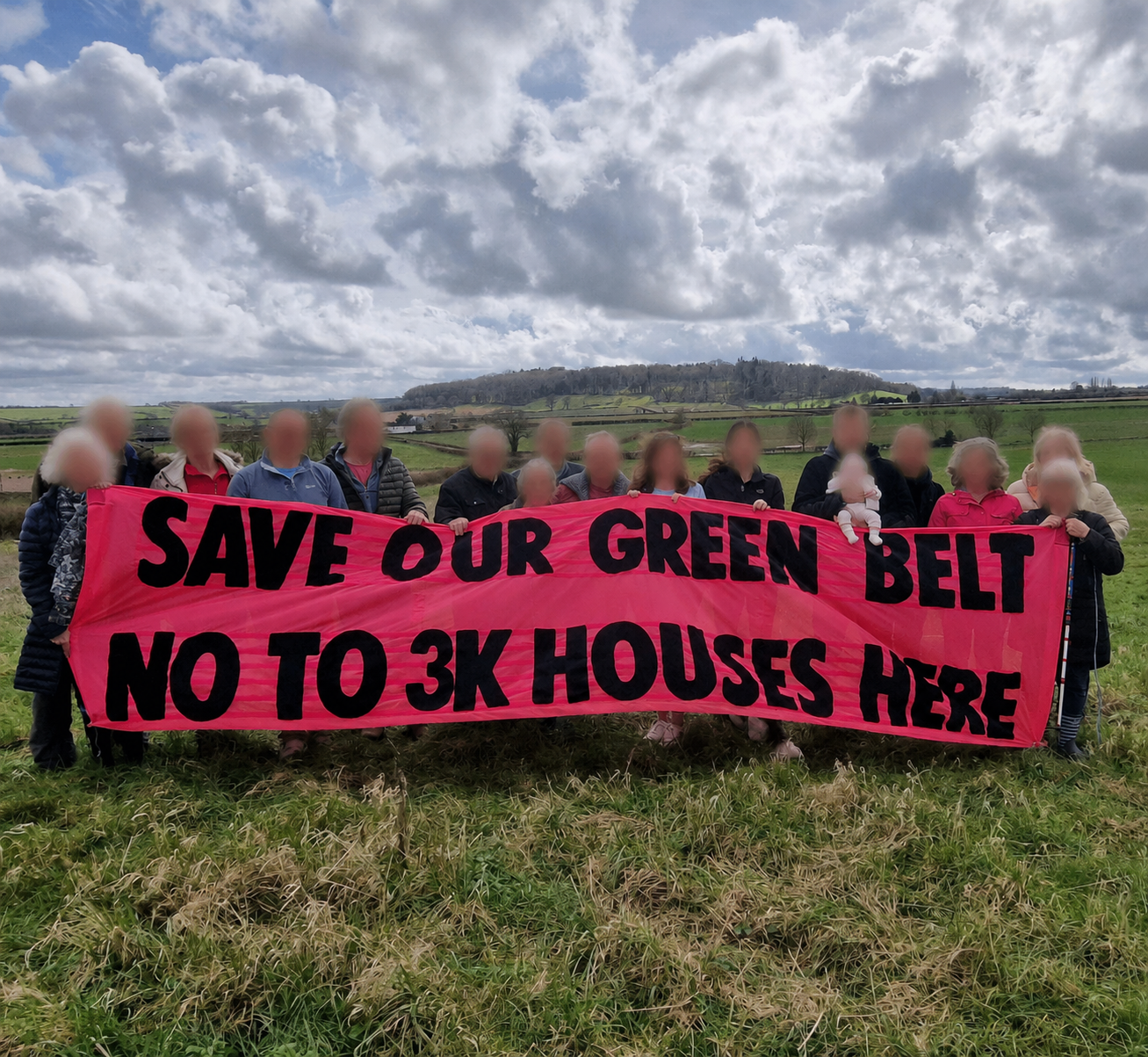
The people who attend planning committees are rarely a representative cross-section of the community. Residents who are content with a development, or indifferent to it, have little reason to spend an evening sitting in a council chamber. Those who strongly oppose it have every reason to be there.
The result is a form of selection bias. A relatively small number of highly motivated opponents can create the impression of overwhelming public opposition.
A local member speaking against an application may do so in front of residents who applaud arguments they agree with and expect their elected representative to champion their cause. For a councillor, there is often little immediate political reward in telling those residents that, despite their objections, the development should proceed. The easiest political position is often opposition.
I have seen meetings where it appears that members have effectively reached their conclusion before the discussion has finished. The debate then becomes less about whether an application should be approved and more about finding a defensible reason for refusing it.
At that point, legal and planning officers can find themselves warning members about whether their proposed reasons for refusal will withstand scrutiny or appeal. All too often, the councillors appear to find this reality a frustration, rather than guidance.
Solar farms provide a good example of the wider problem. It is common to hear some variation of: "I support renewable energy, but this is the wrong location."
Sometimes voting against an application is entirely justified. Not every development is a good one, but if the same arguments are repeated whenever an actual site is proposed, we should reasonably ask where these developments would be welcomed. This is most often seen when a solar farm is proposed. I have watched meetings recently where the councillors have said they have nothing against renewable energy, just not in the proposed location.
Housing faces the same problem. Most people agree that Britain needs more homes. Far fewer people actively want hundreds of new homes built near where they live.
This creates a fundamental democratic dilemma. Local residents should have a meaningful say over the development of their communities. But the cumulative effect of every community being able to resist development is that necessary infrastructure and housing become extraordinarily difficult to deliver without mass opposition.
The answer should not be to remove local democracy from planning. It should be to improve it.
One reform would be to distinguish more clearly between setting the rules and applying them. Councillors and communities should have a powerful role in creating local plans: deciding where development should broadly occur, what infrastructure is required and what standards developments should meet. Once those democratically agreed rules are established, however, developments which clearly comply with them should have a much stronger presumption of approval. This gives effective pre-guidance into acceptable, and not acceptable development.
Public engagement should also happen much earlier. Rather than democracy being concentrated into a confrontational committee meeting at the end of the process, councils could use citizens' panels, deliberative exercises and representative consultation when local plans and major development strategies are being designed. That would capture the views of people who will never attend a planning committee as well as those who do. Critically, this would be before they are exercised by facing development near where they live.
We should also consider whether councillors need stronger training and clearer safeguards around planning decisions, including greater emphasis on the distinction between legitimate planning considerations and the political pressure generated by an unpopular proposal.
Good democracy is not simply about giving the people who turn up to a meeting what they want. It is about balancing competing interests, considering people who are not in the room and making decisions in the longer-term public interest.
Planning committees remain an important expression of local democracy. But if we want to build the homes, renewable energy and infrastructure we need, we should be willing to ask whether the way they currently operate always produces the best democratic decisions. I would suggest that, at present, it does not.
Member discussion
Comments
No comments yet.
Log in or register to comment on this article.